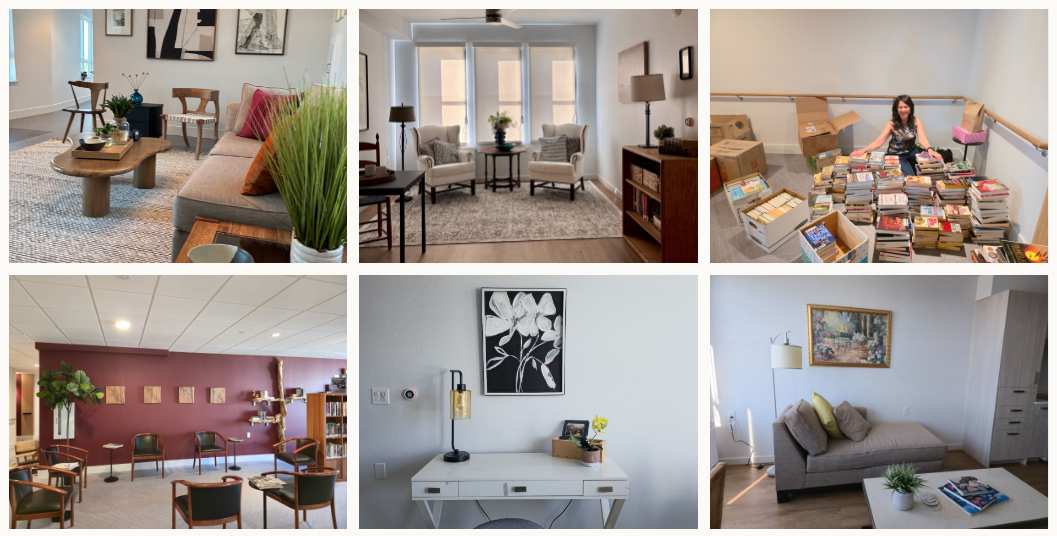

The opening of Timber Street Senior Housing marked more than the completion of a new affordable housing community. It marked the beginning of a new chapter for older adults rebuilding stability, independence, and a sense of home.
Behind that milestone was a remarkable collaboration. Fifteen volunteer designers from the ASID California Peninsula Chapter partnered with Make It Home Bay Area to transform eleven private apartments and six shared community spaces into welcoming environments for older adults transitioning out of homelessness and housing instability. Working without the opportunity to meet the future residents, the designers shared one common goal: to create spaces that would communicate comfort, belonging, and hope from the moment someone walked through the door.
While each designer brought a unique perspective, a common thread emerged throughout the project. Warm materials, calming color palettes, thoughtfully selected furnishings, inviting artwork, and organized, uncluttered spaces helped create homes that felt peaceful, functional, and deeply human. Community spaces—including lounges, a lending library, and creative gathering areas—were designed to encourage conversation, creativity, quiet reflection, and meaningful connections while respecting every resident’s need for independence and choice.
The project became much more than furnishing apartments. It became an opportunity to demonstrate how thoughtful interior design can positively influence daily life. Every decision reflected the belief that a home should support the people who live there, offering not only beauty but also comfort, familiarity, and hope for the future.
“A model for what is possible when the design profession turns its skills toward the community.”— CAROLYN REBUFFEL, FOUNDER AND CEO, MAKE IT HOME BAY AREA
The collaboration extended beyond the finished spaces. Throughout installation, designers shared ideas, solved unexpected challenges together, and supported one another to ensure every apartment and community space reflected the same level of care. In her letter of recommendation, Carolyn Rebuffel described the result as “dignified, welcoming environments” that communicate to residents “that their comfort and well-being matter.”